Over the last few years there has been a push towards “homelessness prevention” as a solution to the ongoing homelessness crisis. GFW has even promoted homelessness prevention opportunities and asked for support in this area in the past. However, the concept of “homelessness prevention” can still appear quite nebulous; so, let’s take a moment to discuss what “homelessness prevention” is, how it’s implemented, and what kind of impact it really has.
Types of Homelessness Prevention
Homelessness prevention is a deceptively simple phrase that means exactly what it says: preventing a person or household from becoming homeless. However, there are many different measures for what the threshold of “prevented” means. Some of the common types of programs that can fall under the “homelessness prevention” umbrella include rental assistance programs, housing stability programs, financial education programs, and supportive services, among others.
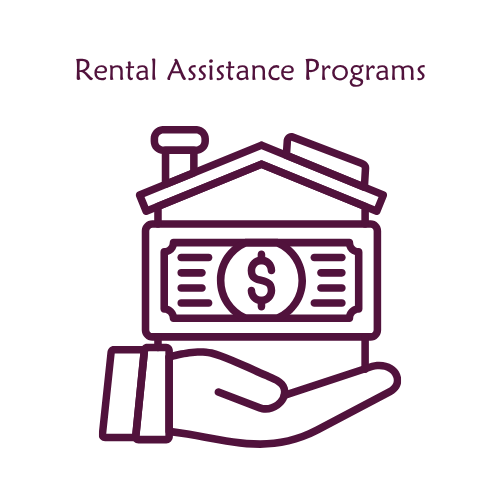
Rental Assistance Programs: These programs are exactly what they sound like – short term assistance, usually resulting in full or partial rental payments for anywhere between 1-12 months. Local organizations like the Housing Resource Center and the City of Monterey have active rental assistance programs.
Housing Stability Programs: While these programs include rental assistance programs, they can also usually provide additional financial support as well. Most housing stability programs can also cover outside expenses like utilities, missed rental payments/ “back rent” and penalties, healthcare bills, or insurance bills. If a person has to choose between paying their rent or paying any of these other necessary bills, housing stability programs will pay those bills so they can spend their money on rent (and maintain a good rental history). Because housing stability programs have a wider scope, they can be less likely to have a time frame attached, but more likely to need additional paperwork. Local housing stability programs are available when funding becomes available, so resources like 211 from United Way of Monterey County are a great way to stay on top of current program offerings.
Financial Education Programs: Financial education spans a wide berth between budgeting skills and credit score recovery. These programs are often offered as stand-alone community programs, but can occasionally be required as part of rental assistance or housing stability programs to make an overall push towards homelessness prevention. Participants in financial education programs can see and have seen positive results to help them maintain housing for longer. Some have even reported they are no longer at risk of becoming homeless. Many community resources offer financial education programs, including United Way of Monterey County and the YWCA.
Supportive Services: Almost all homelessness prevention programs allow for some part of the program’s budget to go towards supportive services. These services can fall into a myriad of categories including case management, housing navigation, physical or mental health programs, or fees to pay towards financial education classes, or job training workshops, just to name a few. Supportive services can also be called “wrap-around services” and are integral to the long-term success of participants. GFW is one such organization that focuses on supportive services locally, and those successes are notable each day.
How to Successfully Implement a Homelessness Prevention Program
Since homelessness prevention can include so many different types of programs, it can be difficult to declare one “right” way or even the “best” way to implement a homelessness prevention program. However, all homeless prevention programs do have the same goal, which is to ensure they are prioritizing the correct participants. Determining how to prioritize those participants can be where we see the largest differences.
Some programs like the City of Monterey and GFW prefer to serve participants on a first-come, first-served basis. This takes a lot of subjectivity out of the process and ensures that the most active participants are receiving services. It can also sometimes mean missing the most vulnerable participants if they don’t have the ability or wherewithal to advocate or “show up” for themselves. In an effort to combat this, GFW has built in a network of community partners that can step in to assist our guests if we cannot, and likewise advocate for guests that may not be able to advocate for themselves as easily. The City of Monterey has set parameters around how often one may access their rental services within a given time frame so as to help a larger number of people. Both are valid solutions to overcoming these barriers and assisting participants with services, it just depends on what each individual’s needs are at any given time.
A vast majority of local organizations dealing in homelessness or homelessness prevention are using the county-wide tools of the Homeless Management Information System (HMIS), Coordinated Access and Referral System (CARS), and Vulnerability Index-Service Prioritization Decision Assistance Tool (VI-SPDAT) to determine prioritization of participants. These tools come with their own challenges. While the VI-SPDAT is a thorough survey that is very good at determining vulnerability and risk, it is entirely reliant on honest self-reporting from participants, which can be challenging. Because higher VI-SPDAT scores are higher priorities, it is best to be honest about needs and potential issues; however, many participants believe they must project the image of a “model citizen” to be prioritized, which can lead to omission of some facts and artificially lowered vulnerability scores. Furthermore, participants who do not want their private information shared within the federal HMIS system can be excluded from these programs altogether, which could mean missing some of the most vulnerable community members in these programs. These potential pitfalls can be mitigated by having local organizations performing these assessments after building trust with their clients, which is why the Coalition of Homeless Service Providers is such a valuable resource for all organizations working with this community in Monterey County.
Whichever method is used, the most important point is that all participants who need assistance are served in a manner consistent with their needs and available services at any given time.
The Impact of Homelessness Prevention Programs
The most important piece of this puzzle is the impact these programs have on the overall homelessness crisis. Luckily, one of the longest-running, most robust, and most well-studied homelessness prevention programs is just next door in Santa Clara County. The San Jose-based organization Destination: Home has been a leader in homelessness prevention in California, and a recent six-year study of their programs showed the kind of impact these programs have on those experiencing homelessness, the wider community, and the taxpayer’s bottom line.
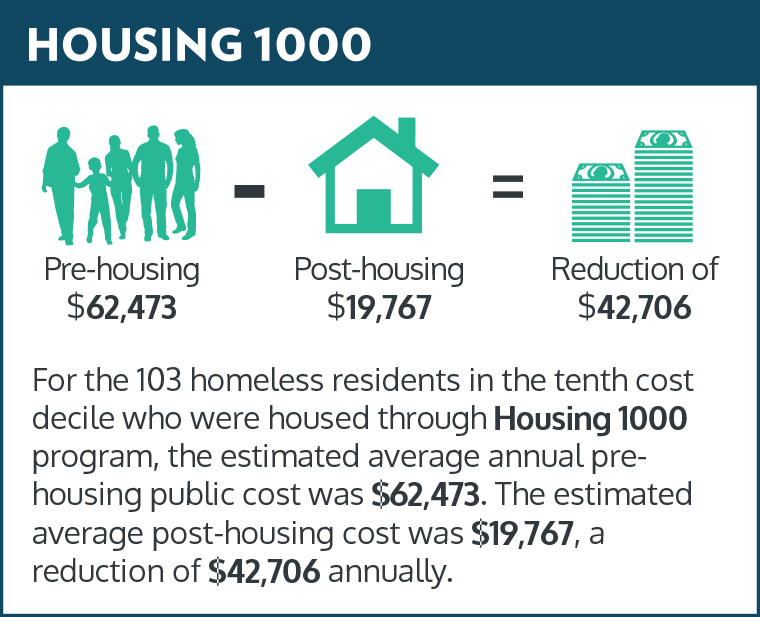
According to the six-year study, over 100,000 people experienced homelessness at some point, with a consistent average of 2,800 “persistently homeless” residents in any given year. The study found that on average, those persistently homeless residents cost public taxpayers $83,000 each per year in preventable healthcare costs, public services, and law enforcement initiatives. One program, the Housing 1000 Program, reported a 68% reduction in public costs associated with formerly-homeless residents housed in the program. At scale, the savings on taxpayer funded programs would more than make up for the cost of providing each individual with stable housing, as proven by Destination: Home.
In terms of combating the homelessness crises in sheer numbers, Destination: Home has also shown that in the last six years, their homelessness prevention programs have made a demonstrable impact on the number of households experiencing homelessness. In Santa Clara County in 2019, they reported that for every 1 household that became or remained housed another 2.5 became homeless. Six years later in 2025, their programs lowered that number to 1.9. The growth of newly homeless households in Santa Clara County is slowing down thanks to the efforts of Destination: Home and the support of their local government.
For those interested in bringing Santa Clara County’s innovative solutions to Monterey County, you can connect to Destination: Home’s Public Policy & Advocacy initiatives here.
How Can You Help?
Homelessness is sometimes referred to as a “wicked problem,” meaning a problem that’s so complex there is not a single or consistent solution to it. We are seeing in Santa Clara County that this may not always be the case with homelessness. If you want to learn more about homelessness prevention efforts, GFW encourages you to follow the progress of the 10 new pilot projects inspired by Destination: Home. You can also support GFW and our guests by:
- Supporting local efforts to build more affordable housing
- Supporting local homelessness prevention efforts like rental assistance and financial education programs
- Volunteering your time and talents to local homeless service providers
- Donating clothing or personal care items, or making a monetary contribution to your local homeless service providers
- Becoming an ambassador by telling everyone you know about your favorite non-profit and what we are doing to help!
If you are ready to be part of the solution, you can find ways to get involved at GFW on our website, or contact us at info@gatheringforwomen.org.
The Main Contributor for this post is:
Resources used in this post:
- CalMatters. “A new homelessness strategy is sweeping California” – https://calmatters.org/housing/homelessness/2026/03/homelessness-prevention-pilot/
- Housing Resource Center – https://www.hrcmontereycounty.org/
- City of Monterey. “Rental Assistance Program” – https://monterey.gov/your_city_hall/departments/community_development/housing_programs/rental_assistance_program.php
- 211 of Monterey County – https://211montereycounty.org/
- United Way Monterey County. “Financial Literacy Workshops” – https://www.unitedwaymcca.org/financial-literacy-workshops
- YWCA. “Financial Literacy Courses: Now being offered to YWCA-MC Clients” – https://www.ywcamc.org/blog/news/financial-literacy-courses
- Gathering for Women. “Programs” – https://gatheringforwomen.org/programs/
- Coalition of Homeless Service Providers. “Homeless Management Information System” – https://chsp.org/hmis/
- Coalition of Homeless Service Providers. “Coordinated Assessment and Referral System” – https://chsp.org/coordinated-entry/
- Community Homeless Solutions. “What is VI-SPADT” – https://www.communityhomelesssolutions.org/apply-for-housing
- Coalition of Homeless Service Providers – https://chsp.org/
- Destination: Home. “Homelessness Prevention” – https://destinationhomesv.org/homelessness-prevention/
- “Home Not Found: The Cost of Homelessness in Silicon Valley.” – https://destinationhomesv.org/wp-content/uploads/2021/01/er_homenotfound_report_6.pdf
- Destination: Home. “Why Our Local Health & Hospital System is Key to Solving Homelessness” – https://destinationhomesv.org/news/2025/09/25/why-our-local-health-hospital-system-is-key-to-solving-homelessness/
- Destination: Home. “Home not found: the cost of homelessness in Silicon Valley” – https://destinationhomesv.org/home-not-found-the-cost-of-homelessness-in-silicon-valley/
- Destination: Home. “Community Plan to End Homelessness.” – https://destinationhomesv.org/community-plan/
- Destination: Home. “Public Policy & Advocacy” – https://destinationhomesv.org/public-policy-advocacy/
- Right at Home – https://rightathomeusa.org/